

Mixed Results for UK Heavy Vehicle Sector as Zero-Emission Uptake Accelerates
Latest figures from the SMMT show a mixed picture for the UK’s heavy vehicle market in the third quarter of 2025. After more than two years of uninterrupted growth, new bus registrations fell by 17% to 1,965 vehicles. The decline was largely driven by a sharp drop in minibus sales, which fell nearly 40% following unusually strong demand last year. In contrast, full-sized buses performed well: single-deck models rose by more than a third, and double-deckers also recorded modest growth.
Despite the quarterly slowdown, the broader bus market remains strong. Registrations for the year so far are up almost 27%, marking the best performance since 2017. Sales of battery-electric buses continue to rise too, with more than 560 delivered in Q3 alone—an increase of 16%—and nearly 2,000 added to UK roads in 2025. This maintains the UK’s position as Europe’s leading market for zero-emission buses, though industry leaders continue to emphasise the need for a comprehensive national charging strategy and sustained funding for regional ZEB programmes.
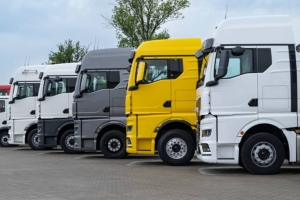
The HGV market also contracted, falling 14.5% to 9,272 vehicles as operators return to typical replacement cycles after several years of post-pandemic demand. Rigid trucks saw the steepest decline, while articulated models dipped only slightly. However, electric HGV registrations grew rapidly from a low base, more than quadrupling to achieve their highest ever share of the market.
Manufacturers now offer a wide range of zero-emission truck models, yet significant obstacles remain for operators—particularly the high upfront cost of electric HGVs and lengthy delays in securing power connections for depots. Industry groups welcomed the government’s Depot Charging Scheme but say faster action is needed to support fleet decarbonisation.
Logistics Industry Responds to Autumn Budget Shake-Up
The government’s Autumn Budget has introduced a range of policies that will influence the UK’s logistics and supply chain operations. Chancellor Rachel Reeves confirmed new measures on infrastructure spending, business rates, customs changes and fuel taxation. According to the OBR, these decisions are expected to lift economic growth to 1.5% next year and help drive inflation down.
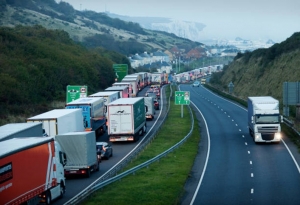
Infrastructure investment remains a central feature of the Budget, with funding pledged for the Lower Thames Crossing, major rail upgrades across the Midlands and North, and a long-term programme for repairing local roads. Additional planning capacity has also been announced, a move welcomed by property and logistics commentators who say it should speed up approvals for new developments.
Businesses have raised concerns about increased business rates for high-value industrial properties, warning that higher charges will affect distribution hubs and increase operating costs. The government’s decision to scrap the de minimis customs relief on low-value imports—forecast to raise £500 million annually—is expected to divert more goods through UK warehousing, creating new opportunities but requiring improved customs and reporting systems.
Fuel duty rises attracted the strongest criticism, with industry groups warning of further pressure on already tight margins. However, continued R&D incentives and new support for apprenticeships have been broadly welcomed.
Why are fewer young people choosing HGV driving?

A small number of young people are entering the heavy goods vehicle sector despite ongoing efforts to bring in fresh talent. One newly qualified 18-year-old driver describes the role as one of the most fulfilling careers available, having grown up around lorries and always wanting to work in the industry. After passing the top-level test, they were offered work almost immediately, highlighting the strong demand for new recruits.
However, younger workers remain largely absent from the haulage workforce, with under-25s making up only a very small proportion of drivers. Many transport companies report that young people rarely consider logistics as a career option. The long-standing perception of unsociable hours, demanding shifts and extended periods away from home is seen as a major deterrent. Industry leaders argue that schools should give pupils earlier exposure to the sector, stressing that the UK would struggle to function without the haulage network.
Training centres are trying to widen the pool of new drivers by making the profession more accessible and appealing. Some centres are actively encouraging more women to take their HGV tests and are offering tailored support to learners with disabilities or for whom English is not a first language. Investment in modern vehicles and improved training environments is also being used to help reshape the industry’s image.
Social media influencers who promote the sector say many misconceptions still persist. They highlight that pay levels are increasingly competitive, that the job can be compatible with family life, and that logistics provides crucial support to every other industry. Their message is simple: the country relies on lorry drivers, and without new entrants, the consequences will be felt everywhere.
Updated HGV visibility rules proving safer for cyclists and pedestrians

More than a year after revised safety rules for heavy goods vehicles came into force, experts say the changes are already making roads safer for people most at risk. The amendment to international HGV standards, achieved with support from The Road Safety Trust, strengthens requirements around what drivers must be able to see directly through their cab windows – a feature known as direct vision.
Direct vision plays a crucial role in preventing collisions involving lorries and vulnerable road users such as cyclists and pedestrians. Researchers at Loughborough University, backed by Trust funding, identified weaknesses in the original 2022 regulation, warning that manufacturers could increase the apparent visibility from the cab without making a meaningful improvement to real-world safety. A series of detailed studies was carried out to examine alternative ways of measuring what drivers can see and to assess how well each method protected people in front of the vehicle.
Their findings led to a stronger framework that was submitted as an amendment to UNECE Regulation 167. The updated version introduces a two-part assessment, requiring vehicles to meet both broad visibility standards and more stringent requirements in the high-risk areas immediately ahead of the cab. The United Nations Economic Commission for Europe approved the amendment in 2024, helping to ensure the regulation continues to deliver genuine safety benefits.
With Road Safety Week 2025 approaching, Loughborough’s Dr Steve Summerskill reflected on how the project has sparked international interest. Since the amendment was adopted, he has been working with global partners to adapt similar standards for other regions, including a new collaboration with Canadian and Australian authorities to tailor the regulation for North American HGVs. Dr Summerskill praised The Road Safety Trust for its support, noting that the partnership has helped elevate the research to a global level.
NCA Warns Criminal Gangs Targeting HGV Drivers in People-Smuggling Operations
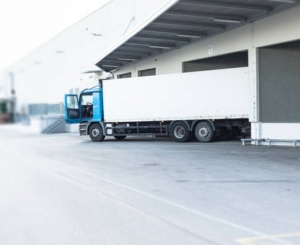
The National Crime Agency (NCA) has issued a warning that organised crime groups are approaching HGV drivers across the UK to take part in people-smuggling operations. The alert follows a rise in arrests in Kent, where several drivers have been caught attempting to travel to France with migrants hidden in their vehicles. Some offenders are believed to have deliberately assisted smugglers, while others turned a blind eye by leaving their lorries accessible in known drop-off areas.
Criminal networks are offering drivers thousands of pounds to transport migrants across the Channel, often presenting it as easy money. NCA Deputy Director of Investigations Craig Turner said many drivers were being misled into believing the risk was low, but “the consequences are devastating,” with those convicted facing lengthy prison sentences. He urged drivers to report any suspicious approaches or activity, stressing that most haulage workers are law-abiding and play a vital role in safeguarding communities.
Recent cases have highlighted the growing scale of the issue. In August, Romanian driver Iona Monescu was sentenced to three years in prison after 44 people were discovered in his trailer at Dover. Several other drivers have also been jailed for similar offences.
The NCA, Border Force and Crimestoppers continue to run awareness campaigns encouraging drivers in the logistics sector to seek guidance and report concerns confidentially to help combat organised immigration crime.
RHA Calls for Urgent Action to Tackle Growing HGV Driver Shortage

The Road Haulage Association (RHA) is urging the government to revive key HGV driver training schemes and reform funding for skills development amid a worsening driver shortage. New research shows that around 100,000 HGV drivers have let their Driver Qualification Card (DQC) expire in the past year — equivalent to one in six of all working-age drivers — with many of those leaving the sector in their 30s and 40s.
The RHA estimates that 60,000 new drivers will need to be trained annually over the next five years to meet industry needs and keep supply chains moving. With 80% of the UK’s goods transported by road, the organisation warns that failure to address the shortage could have serious consequences for the wider economy.
Managing Director Richard Smith stressed that driver recruitment and retention must become a government priority. He said the closure of national HGV “bootcamp” training programmes has made it harder for firms to cover training costs and called for their reinstatement until a long-term Growth and Skills Levy is introduced.
Smith also highlighted long-standing problems around poor roadside facilities and limited secure parking. He urged collaboration between government, training providers and the industry to create lasting solutions that ensure the UK has a sustainable and skilled driver workforce for the future.
Full M27 closure announced for major underpass construction

Drivers in Hampshire are being warned of a complete closure of the M27 motorway between Junctions 9 at Whiteley and 11 at Fareham as part of a major infrastructure upgrade. Hampshire County Council, in partnership with National Highways, will carry out extensive engineering work to install a new dual carriageway underpass linked to the Junction 10 improvement scheme.
The motorway will be shut in both directions for the duration of the project, allowing construction teams to complete the complex installation safely and efficiently. The decision to carry out the full closure rather than a series of phased restrictions is aimed at shortening the overall disruption period and reducing the long-term impact on motorists.
Traffic will be diverted along the A27 during the closure period, with clearly marked alternative routes in place. Authorities have advised that congestion is likely, particularly during daytime travel hours, and drivers are urged to allow extra time for their journeys or seek other routes where possible.
The scheme forms part of wider efforts to improve connectivity and ease congestion in the Fareham area. Once complete, the new underpass is expected to improve access to the M27, support local development and enhance long-term transport resilience across south Hampshire.
Amazon rolls out record fleet of electric trucks across UK
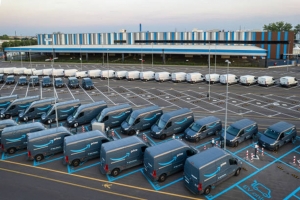
Amazon has started integrating its largest-ever fleet of electric heavy goods vehicles into its British operations, marking a significant step in its move towards a low-carbon logistics network. The new Mercedes-Benz eActros 600 lorries, crossing the Humber Bridge in East Yorkshire, will eventually total 160 vehicles, handling the transport of over 300 million items between the company’s regional distribution centres.
To support the switch, Amazon has installed rapid 360kW charging stations at its depots, capable of recharging the 40-tonne trucks from 20% to 80% in just over an hour. The company will also introduce 800 new Mercedes-Benz eSprinter vans as part of its ongoing effort to reduce emissions across its delivery fleet.
Nicola Fyfe, Amazon’s Vice President of Logistics for the EU, described the rollout as a major milestone in decarbonising the company’s UK operations. She noted that while Amazon has made significant investments in charging facilities, national progress depends on stronger collaboration between industry leaders and government to build a reliable, countrywide network.
Heiko Selzam, Managing Director of Daimler Truck UK, said the eActros 600 was designed for companies leading the charge in sustainable logistics. The Road Haulage Association added its support, urging government investment in public charging points and proposing a fuel duty rebate linked to emissions to accelerate the shift from diesel fleets.