

Transport Bodies Urge €100bn Boost for EU Infrastructure Fund

More than 40 European transport associations, led by the International Road Transport Union (IRU), have appealed to EU governments and the European Commission to commit at least €100 billion to the next round of Connecting Europe Facility (CEF) funding. The request comes as discussions gather pace over the bloc’s forthcoming Multiannual Financial Framework (MFF), which will set long-term spending priorities.
The coalition argues that without a substantial increase in infrastructure investment, the EU risks undermining its goals on economic growth, decarbonisation and security. In a joint statement, the organisations stress that modern, well-connected transport networks are vital for cross-border trade, military mobility and the shift towards low- and zero-emission vehicles.
Raluca Marian, IRU’s EU Director, said Europe cannot expect to strengthen competitiveness or meet climate targets if transport infrastructure remains underfunded. She highlighted the need for expanded cross-border corridors, more safe and secure lorry parking, improved digital systems and facilities capable of supporting alternative fuel vehicles—projects that often exceed the capacity of national budgets alone.
Although previous CEF programmes have focused on projects offering clear European value, demand for funding has consistently surpassed the resources available. The group maintains that the next EU budget must better align funding with political ambition, ensuring stronger corridor capacity and coordinated infrastructure development across Member States.
Volvo Sees Record Growth in Gas-Powered Truck Sales
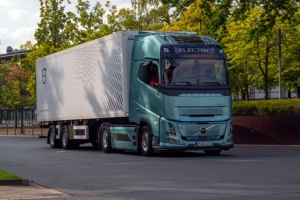
Volvo Trucks has reported its strongest year yet for gas-powered lorries, with 2025 marking a record for global sales. Since introducing the technology in 2018, the manufacturer has now supplied more than 10,000 gas-fuelled trucks worldwide. The UK currently leads demand, followed by Germany, Sweden, the Netherlands, Norway and France, while emerging markets such as India and parts of Latin America are showing steady growth.
The company’s gas engines are available across its heavy-duty FM, FH and FH Aero models. These vehicles can operate on liquefied natural gas (LNG) or bio-LNG, a renewable alternative produced from organic waste. Volvo says its engines, based on the proven D13 platform, deliver performance comparable to diesel in terms of power and torque, while significantly lowering carbon emissions.
With a range of up to 1,000 kilometres on a single tank, the trucks are suited to long-distance haulage, regional distribution and construction work. Expanding refuelling infrastructure across countries including Germany, Norway, Finland and Sweden has made adoption easier, particularly as many stations now offer bio-LNG. In regions where tax incentives support renewable fuels, the switch can also be financially attractive.
Volvo’s gas models use High Pressure Direct Injection technology and a small amount of ignition fuel, which can be HVO to further cut emissions. Gas-powered vehicles form part of Volvo’s broader strategy, alongside battery-electric and fuel-cell technologies, to achieve net-zero tailpipe emissions by 2040.
MPs Warn of Mounting Costs as HGV Tax Set to Rise

Ministers are facing criticism over plans to increase Vehicle Excise Duty (VED) for heavy goods vehicles from April, with some MPs warning operators could see annual bills climb by more than £2,000. The rise, confirmed in last year’s Autumn Budget, will take effect from 1 April 2026 and will uprate lorry tax in line with inflation.
The changes apply to a wide range of commercial vehicles, including rigid trucks, articulated units and vehicles hauling trailers or abnormal loads. A 44-tonne lorry currently attracts an annual charge of £1,643. During Commons scrutiny of the Finance Bill, Shadow Exchequer Secretary James Wild argued that the system is already highly complex, with more than 80 different VED bands determined by weight, axle set-up and emissions standards.
MPs also pointed to wider financial pressures on the haulage sector. Industry figures estimate fuel duty alone adds over £2,000 a year to the running costs of a single HGV. Additional strains include higher wages, business rate changes and post-Brexit administrative burdens affecting trade.
Liberal Democrat MP Joshua Reynolds said repeated policy shifts risked placing further strain on a sector vital to the UK economy. However, Treasury minister Dan Tomlinson defended the move, saying the uprating merely maintains rates in real terms and provides certainty for businesses. He added that future tax decisions would be considered ahead of the next Budget, while fuel duty is due to remain frozen until August 2026 before staged increases begin.
DVSA Issues New Inspection Rules for HGVs and PSVs

The DVSA has published refreshed Heavy Goods Vehicle (HGV) and Public Service Vehicle (PSV) Inspection Manuals, due to take effect from 1 April 2026. The revised guidance will be used across Great Britain for annual tests and roadside checks, making it essential reading for fleet operators, transport managers and workshop teams.
Released on GOV.UK, the updated manuals set out the latest standards inspectors must apply when assessing commercial vehicles. They cover defect categories, reasons for failure and the step-by-step processes examiners should follow, replacing earlier versions of the guidance currently in use.
Although the overall test framework remains broadly the same, the 2026 editions aim to improve consistency and reduce confusion. The DVSA has tightened up wording, restructured sections and added clearer explanations of terms used throughout. This comes as vehicles continue to incorporate more complex design features and advanced safety systems.
Several technical areas have been sharpened, including inspection guidance on sideguards, braking components and corrosion. There is also clearer direction on how load indexes relate to GB plated weights, alongside corrections designed to help inspectors and operators interpret requirements in the same way.
The DVSA has not presented the changes as a major shift in enforcement, but operators are being urged to review the updates early. Even small adjustments can affect pass rates, roadside outcomes and expectations around routine maintenance between tests. Fleets that align their checks and records with the new manuals should be better placed to avoid failures and stay compliant.
EV Skills Gap Threatens Progress

A shortage of qualified electric vehicle (EV) technicians could slow the transition to cleaner transport, industry bodies have warned. Logistics UK says fleet operators may hesitate to invest in electric vehicles if they are uncertain about access to skilled engineers capable of maintaining them.
New figures from the Institute of the Motor Industry (IMI) show that by the end of the third quarter of 2025, only around 25% of technicians held the qualifications required to work safely on EVs. The data also highlights regional imbalances, with most accredited staff employed by franchised dealerships rather than independent garages. Worryingly, the number of technicians gaining EV certification fell by almost 13% in Q3 compared with the start of the year.
The IMI believes inconsistent government messaging on electric motoring, coupled with wider economic pressures, has dampened enthusiasm for training. Its forecasts suggest the current pace of upskilling will not meet demand linked to the UK’s Zero Emission Vehicle targets. Without rapid progress, the shortfall in trained technicians could widen significantly over the next decade, particularly affecting the growing second-hand EV market.
Logistics UK has urged ministers to act, arguing that vehicle downtime directly impacts commercial viability. Alongside expanding charging infrastructure, the organisation says greater investment in technical skills is essential to give businesses the confidence to electrify their fleets and keep vehicles operating efficiently.
Plant Push for Drivers

Workers at a Wiltshire truck stop are spending February encouraging lorry drivers to make healthier food choices, with a new campaign aimed at improving heart health. The initiative is running at a truck stop near junction 17 of the M4 and ties in with Valentine’s Day.
The month-long scheme, titled “Love Your Hearts”, focuses on increasing the amount of plant-based foods drivers eat each week. Rather than urging people to cut out treats, staff are promoting simple additions — such as adding nuts to breakfast, varying daily fruit choices, or including extra vegetables with meals — with the aim of reaching 30 different plant foods over the course of a week.
One staff member involved in developing the campaign said long hours spent sitting in a cab can leave drivers more at risk of health problems. The focus is on improving gut health, which can help reduce inflammation and potentially lower the risk of heart disease.
A regular HGV driver said it can be challenging to find affordable, healthy options while on the road, particularly at motorway services where fast food is often the main choice. Staff at the site said the stop offers around 160 overnight parking spaces and aims to provide drivers with a proper meal, a warm welcome and a comfortable place to rest.
Parcel Companies Warned Over Fines for Failing Customers

Major parcel delivery firms in the UK have been put on notice that they could face substantial financial penalties if they are found to be breaching rules on complaints handling and support for disabled customers. Regulator Ofcom has written to leading operators after identifying ongoing concerns about service standards.
The watchdog said it is carrying out a further review of how companies are complying with existing regulations, following evidence of widespread customer dissatisfaction highlighted in a monitoring report published late last year. Ofcom warned that where operators fall short, it may pursue enforcement action or consider tightening the regulatory framework to better protect consumers.
Ofcom’s research shows that a quarter of customers remain unhappy with some aspect of the complaints process when dealing with parcel firms. While overall satisfaction has improved slightly since 2024, fewer than half of customers report being satisfied. Previous reviews have also found that disabled people are more likely to experience delivery problems and face additional barriers when raising complaints.
The regulator has called parcel operators into meetings to discuss their performance, particularly around fair treatment of vulnerable customers. Ofcom said failures in this area would be treated seriously, pointing to recent multimillion-pound fines imposed in other sectors for similar breaches. An Ofcom spokesperson said that although new rules introduced in 2023 have led to some progress, too many customers are still encountering problems. Consumer group Citizens Advice has also raised concerns, reporting a sharp rise in complaints about Royal Mail and describing its recent Christmas performance as particularly poor.
UPS Plans Further Job Cuts as Amazon Deliveries Scaled Back

Parcel delivery firm UPS has announced plans to reduce its workforce by as many as 30,000 roles during 2026, as it continues to cut back the volume of parcels it handles for its largest customer, Amazon. The move forms part of a wider restructuring strategy aimed at reshaping the business and improving long-term profitability.
The company began scaling back its reliance on Amazon last year, shifting its focus towards higher-margin areas such as healthcare logistics. As part of this transition, UPS has already reduced its global workforce by around 48,000 positions. The latest reductions are expected to be achieved mainly through natural staff turnover, with a second voluntary severance scheme planned for full-time drivers.
UPS chief financial officer Brian Dykes said the company was targeting cost savings of around $3bn (£2.2bn) linked to what it describes as its “Amazon glide-down” strategy. Despite the job cuts, the business reported consolidated revenues of $24.5bn (£17.7bn) in the final quarter of 2025 and is forecasting revenues of $89.7bn (£70.9bn) for 2026.
Chief executive Carol Tomé said the company is entering the final phase of its accelerated plan to reduce Amazon parcel volumes, with a further one million parcels per day set to be removed from the network this year. She added that the deliberate downsizing of operations was being supported by tighter planning, automation and new technologies, helping UPS operate a smaller but more efficient delivery network.