

Thermal Cameras Help Essex Police Spot Dangerous Lorry Tyres

Essex Police has begun using handheld thermal imaging devices to identify potential faults in lorry tyres, a technique the force believes is currently unique in England. The commercial vehicle unit, which previously relied on visual inspections alone, can now pinpoint abnormal heat patterns that signal tyre or hub problems before they escalate.
The technology allows officers to detect “hot spots” caused by issues such as overloading on a single axle or failing components. Overheated hubs can ignite, resulting in significant fires and traffic disruption on major routes. Police say the new approach gives them a chance to step in early, reducing the risk of serious incidents. When a problem is identified, drivers may have to organise repairs, or in the case of underinflated tyres, call out a mobile fitter.
Officers can also show thermal images directly to drivers to explain the findings. The force emphasised that tyre temperature plays a vital role in vehicle safety, influencing grip, handling and overall performance. Rubber needs to stay flexible enough to adapt to the road surface without becoming excessively hot and wearing out prematurely.
Essex Police encouraged all motorists to carry out basic tyre checks before travelling, adding that many drivers underestimate the importance of proper tyre maintenance. The force hopes the new tools will make roads safer by preventing avoidable breakdowns and fires.
Training Firm Warns of Gap as Lorry Driver Bootcamps End

Insite, previously known as HGVC, has revealed it has helped more than 4,500 new lorry drivers qualify through government-backed skills bootcamps, with most trainees moving straight into jobs. The company hailed the scheme as a major achievement, crediting it with supplying businesses across the UK with much-needed drivers.
The bootcamps, introduced by the Department for Education in 2021, offered heavily subsidised training for employers. Smaller firms were able to access courses with 90% of the costs covered, while larger organisations received 70% support. Insite became the largest provider, working with over 1,100 companies, and said more than half of all participants trained through a co-funded model. However, this year marked the end of central government funding.
James Clifford, Insite’s chief executive, said the closure of the scheme comes at a challenging moment for logistics companies. He explained that businesses were increasingly struggling to manage training across multiple sites, with complex supply chains making it harder to keep operations running smoothly. Without subsidised options, he warned, organisations were being pushed to rethink how they deliver essential skills development.
In response, Insite has broadened its services, now offering fully managed warehouse training, including forklift qualifications and introductory courses. Meanwhile, the Road Haulage Association has urged ministers to reinstate the bootcamps, citing research showing the UK needs 60,000 newly trained drivers every year to keep pace with demand.
Gatwick Named the UK’s Most Disruptive Airport for Christmas Travel

A new ranking has identified the UK airports where travellers are most likely to face disruption during the festive season. With December remaining one of the peak months for international travel, millions of passengers pass through UK terminals in the run-up to Christmas. Using Civil Aviation Authority data from Christmas 2024, Quotezone.co.uk has produced its “Christmas Chaos Airport Index”, assessing the 14 busiest airports based on average delays, cancellation rates, long waits and passenger traffic.
Gatwick claimed the top spot as the most chaotic airport, reporting the longest average delay at 26 minutes – more than twice that recorded at East Midlands Airport. More than 20% of Gatwick flights ran over half an hour behind schedule. Manchester followed in second place, with average delays of 22 minutes and similarly high levels of extended waits. London Stansted came third, logging the highest proportion of long delays at just over 23%, although its cancellation rate was one of the lowest.
Heathrow, despite being the UK’s busiest airport, fared better than many might expect, recording an average delay of 18 minutes. In Scotland, Edinburgh was highlighted as the most disrupted airport overall, while Glasgow International had the highest cancellation rate across the index. London Luton, however, appeared near the bottom of the chaos rankings, with shorter delays and minimal cancellations despite serving more than one million passengers.
For travellers seeking the smoothest experience, East Midlands Airport proved to be the standout performer. It posted the lowest average delays, the fewest long waits and a cancellation rate of only 0.2%. As the UK braces for what is expected to be its busiest Christmas travel period on record, the findings may help passengers choose airports that offer a calmer and more reliable start to their festive journeys.
BrakePlus Monitoring System Installed on Over 23,000 UK Trailers
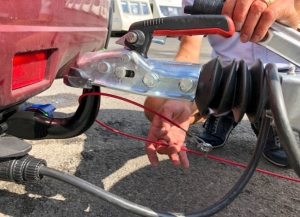
More than half a year after the Driver and Vehicle Standards Agency (DVSA) updated its guidance on heavy goods vehicle brake assessments, TIP has confirmed that over 23,000 trailers across the UK are now equipped with its BrakePlus Electronic Braking Performance Monitoring System (EBPMS). The revised Guide to Maintaining Roadworthiness requires braking systems to be evaluated at every service inspection, either through a traditional roller brake test or via verified data from an approved monitoring system.
With operators increasingly recognising the operational and financial advantages of EBPMS, reliance on regular workshop visits for roller brake tests has begun to decline. TIP’s commercial director, Karl Davies, noted that frequent trips off the road for testing can be disruptive and costly, prompting many fleets to adopt continuous monitoring instead. BrakePlus tracks braking force against deceleration in real time, providing early warnings of reduced effectiveness.
TIP emphasises, however, that EBPMS is not a substitute for physical roller brake testing. While BrakePlus highlights performance changes, it does not pinpoint specific axles or assess the parking brake. Roller brake tests remain essential for detailed diagnostics and are routinely carried out whenever the system flags a potential issue. They also continue to form a core part of annual MOT requirements.
The company reports strong industry uptake, with thousands more installations expected over the next six months, including on third-party trailers. TIP believes the growing adoption reflects the clear benefits of integrating continual braking performance monitoring into fleet safety practices.
Industry Warns Fuel Duty Rise Could Trigger Fresh Inflation Surge

Chancellor Rachel Reeves has confirmed that fuel duty will remain frozen until September 2026, before the government begins restoring the 5p-per-litre reduction and reintroducing yearly increases for the first time since 2011. The phased reversal is set to begin later in 2026, with the duty rising each April in line with RPI. According to the Office for Budget Responsibility, the long-running freeze has cost the Treasury an estimated £120bn in foregone revenue.
Haulage and logistics bodies have reacted with alarm, cautioning that planned rises will place additional pressure on an already stretched supply chain. Richard Smith, managing director of the Road Haulage Association, said that while extending the freeze provides temporary relief, planned increases from 2027 risk delivering a “hammer blow” to operators and driving up everyday costs for families. Logistics UK went further, describing the move as an “inflationary timebomb”, warning that higher fuel duty would amount to hundreds of millions of pounds in extra tax for businesses and intensify inflationary pressures.
Fleet organisations echoed these concerns. The Association of Fleet Professionals criticised the 2026 rise as both unexpected and unwelcome, while FairFuelUK said that although an additional year’s freeze was positive, looming duty increases could weaken consumer confidence. The Budget also unveiled a new road-pricing system for electric vehicles from April 2028, with private EVs charged 3p per mile and plug-in hybrids 1.5p, adjusted annually with CPI. Electric vans will be exempt to encourage the shift to cleaner fleets.
Industry leaders stressed that rising fuel duty and future EV taxation must be accompanied by a stable, long-term transport funding strategy. They argue that clear policy direction is essential if operators are to commit to major investment in zero-emission vehicles and charging infrastructure.
Haulage Sector Warns UK Needs 60,000 New Lorry Drivers Each Year

The Road Haulage Association (RHA) has urged ministers to restore key training schemes and overhaul the skills funding system after new figures exposed the scale of the UK’s driver shortage. According to the organisation, around 100,000 HGV drivers let their Driver Qualification Card lapse in the past year alone — roughly one in six of Britain’s working-age lorry drivers. Worryingly, many of those stepping away from the job are in their 30s and 40s, raising fresh concerns about long-term workforce sustainability.
The RHA now estimates that to keep pace with demand and maintain economic growth, the UK must train about 60,000 new drivers every year for the next five years. With almost 80 percent of goods travelling by road, the organisation says that bolstering the supply of qualified HGV drivers is essential to protecting supply chains and preventing future disruption.
Managing Director Richard Smith stressed that recruitment and training need immediate government attention. He criticised the closure of national HGV bootcamp programmes, warning that many haulage firms cannot afford rising training costs without support. Smith said that reinstating these schemes should be a priority until a reformed Growth and Skills Levy can guarantee long-term training options.
Concerns over long working hours, poor roadside facilities and a lack of safe parking are also pushing people out of the profession. The RHA is calling on industry leaders, training providers and policymakers to collaborate on lasting solutions that secure the workforce for the decade ahead.