


Test Owner
Police Lorry Patrols Uncover Dozens of Driving Offences

More than 100 motoring offences were identified after Essex Police carried out a recent road safety campaign targeting dangerous drivers. The operation saw officers stop 166 vehicles across key routes in the county.
Working as part of Operation Tramline, a national initiative with National Highways, officers used an unmarked HGV cab to gain a higher vantage point. This allowed them to look directly into vehicles and identify risky behaviour such as mobile phone use, lack of seatbelts and distracted driving that may otherwise go unnoticed.
During the checks, five motorists were arrested on suspicion of drug driving, while seven vehicles were seized due to licence-related offences. In addition, 19 drivers were reported for using their phones behind the wheel and 44 people were caught not wearing seatbelts. Officers also recorded dozens of other violations, including careless driving, invalid number plates and missing MOT certificates.
Police say these types of offences are among the leading causes of serious and fatal collisions. They emphasised that behaviours such as drug driving and distraction are deliberate choices that put lives at risk. Officers added that patrols will continue throughout the year, focusing on busy roads to improve safety and ensure drivers are held accountable for dangerous conduct.
Gen Z Interested in Tech-Driven Driving Careers

Young people from Generation Z could help address the ongoing shortage of commercial drivers, according to new research highlighting their growing interest in technology-enabled transport roles. The study found that many people aged between 16 and 25 are open to careers in driving, particularly when modern technology plays a central role in the job.
More than half of those surveyed said they would like to work in positions that involve artificial intelligence or advanced digital systems. Around 58% said a driving career appealed to them, with flexible schedules, the ability to work independently and avoiding a traditional office environment among the main attractions.
However, the research also showed that younger workers have higher expectations when considering this type of career. About one in four respondents said they would be more likely to choose commercial driving if the role included emerging technologies such as AI-powered tools or autonomous vehicle systems. Despite this interest, misconceptions about the job remain common, with many respondents believing the work involves long hours or lacks variety.
Industry experts say the sector needs to reshape how these careers are presented to younger generations. Modern fleets increasingly rely on digital systems and automation that reduce paperwork and improve efficiency for drivers. By highlighting these technological advances and presenting drivers as skilled professionals operating connected systems, companies hope to attract a new generation of tech-savvy workers to keep transport networks running.
Warning Over Fire Risk During Electric Vehicle Paint Repairs
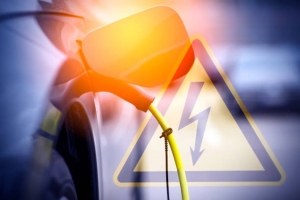
Traditional paint repair techniques used in vehicle bodyshops could pose a serious fire risk when applied to electric vehicles, according to insurance specialists. AXA UK Commercial has warned that standard repair processes, particularly those involving high heat, may damage sensitive EV components and increase the risk of fires or explosions.
When a car panel is repaired and repainted, it is typically cured inside specialised paint booths where temperatures can exceed 50°C. While this method is widely used for petrol and diesel vehicles without issue, the same conditions may negatively affect electric vehicles. Experts warn that excessive heat exposure can harm EV batteries or interfere with high-voltage electrical systems.
Dan Wilkins, property technical risk manager at AXA UK Commercial, said repair centres must be aware of the potential dangers and ensure procedures are adapted for electric vehicles. He explained that EV batteries are highly sensitive to temperature and damage could cause electrical faults that might lead to fires. Wilkins also noted that many garages may still lack the specialist equipment or training needed to safely carry out EV repairs.
To reduce the risks, AXA has issued new safety guidance for bodyshops working with electric vehicles. Recommendations include using low-temperature paint products, fast-drying coatings that require less heat, or infrared systems that target specific panels rather than heating the entire vehicle. The insurer also advises repairers to follow manufacturers’ guidelines and use temperature monitoring equipment to track heat levels around batteries and high-voltage components during repairs.
Fuel Prices Climb as Middle East Tensions Disrupt Oil Supply

Fuel prices in the UK have risen sharply following escalating conflict in the Middle East, pushing the average cost of diesel to its highest level in 16 months. The increase comes after renewed military tensions in the region disrupted global oil supplies and triggered a surge in wholesale energy prices.
Oil markets reacted strongly after attacks across the Middle East affected production and shipping routes. In particular, disruption around the Strait of Hormuz – a crucial global shipping channel for oil and gas – has slowed tanker movements and raised concerns about supply shortages. The situation has led to higher wholesale fuel costs across Europe and the United States, which are now beginning to filter through to petrol stations.
Industry figures show petrol prices have risen by several pence per litre in recent days, while diesel has increased even more sharply. Retail groups say these changes reflect rising wholesale costs rather than profiteering by forecourts. They have also advised motorists to compare prices locally, as different stations may adjust prices at different speeds depending on their supply contracts.
Energy analysts warn that prices could continue to rise if instability in the Middle East persists. Higher oil prices have already affected financial markets, with stock markets across Europe falling amid fears that increasing energy costs could drive inflation higher and potentially lead to further increases in interest rates.
Transport and Logistics Firms Move Away from Homeworking

Businesses within the UK transport and logistics sector are becoming increasingly reluctant to support homeworking, according to new data released by the Office for National Statistics (ONS). The figures show that only 4.4% of companies in the industry are currently using, or planning to introduce, increased homeworking. This marks a significant drop from 14.6% recorded in the previous survey carried out in November 2025.
The sector now appears to be the least likely to adopt remote working practices when compared with other industries. By contrast, organisations in the information and communication sector remain far more open to flexible working arrangements, with around 40.6% either already using or planning to expand homeworking in the near future.
Other sectors that traditionally rely on on-site work also appear more receptive to remote options than transport and logistics. Around 16.2% of manufacturing firms and 14.9% of retail businesses reported plans to increase homeworking. Even the accommodation and food service sector, which includes restaurants, pubs and hotels, reported a higher figure of 5.8%.
Industry analysts suggest that the limited use of remote working could be contributing to ongoing recruitment challenges within the sector. Some businesses have reported pausing operations or struggling to meet demand due to staffing shortages. Employers have cited several reasons for resisting homeworking, including concerns about suitability for the role, difficulties managing staff remotely, and worries that remote working may negatively impact workplace culture and staff integration.
Transport Bodies Urge €100bn Boost for EU Infrastructure Fund

More than 40 European transport associations, led by the International Road Transport Union (IRU), have appealed to EU governments and the European Commission to commit at least €100 billion to the next round of Connecting Europe Facility (CEF) funding. The request comes as discussions gather pace over the bloc’s forthcoming Multiannual Financial Framework (MFF), which will set long-term spending priorities.
The coalition argues that without a substantial increase in infrastructure investment, the EU risks undermining its goals on economic growth, decarbonisation and security. In a joint statement, the organisations stress that modern, well-connected transport networks are vital for cross-border trade, military mobility and the shift towards low- and zero-emission vehicles.
Raluca Marian, IRU’s EU Director, said Europe cannot expect to strengthen competitiveness or meet climate targets if transport infrastructure remains underfunded. She highlighted the need for expanded cross-border corridors, more safe and secure lorry parking, improved digital systems and facilities capable of supporting alternative fuel vehicles—projects that often exceed the capacity of national budgets alone.
Although previous CEF programmes have focused on projects offering clear European value, demand for funding has consistently surpassed the resources available. The group maintains that the next EU budget must better align funding with political ambition, ensuring stronger corridor capacity and coordinated infrastructure development across Member States.
Volvo Sees Record Growth in Gas-Powered Truck Sales
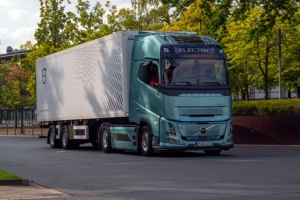
Volvo Trucks has reported its strongest year yet for gas-powered lorries, with 2025 marking a record for global sales. Since introducing the technology in 2018, the manufacturer has now supplied more than 10,000 gas-fuelled trucks worldwide. The UK currently leads demand, followed by Germany, Sweden, the Netherlands, Norway and France, while emerging markets such as India and parts of Latin America are showing steady growth.
The company’s gas engines are available across its heavy-duty FM, FH and FH Aero models. These vehicles can operate on liquefied natural gas (LNG) or bio-LNG, a renewable alternative produced from organic waste. Volvo says its engines, based on the proven D13 platform, deliver performance comparable to diesel in terms of power and torque, while significantly lowering carbon emissions.
With a range of up to 1,000 kilometres on a single tank, the trucks are suited to long-distance haulage, regional distribution and construction work. Expanding refuelling infrastructure across countries including Germany, Norway, Finland and Sweden has made adoption easier, particularly as many stations now offer bio-LNG. In regions where tax incentives support renewable fuels, the switch can also be financially attractive.
Volvo’s gas models use High Pressure Direct Injection technology and a small amount of ignition fuel, which can be HVO to further cut emissions. Gas-powered vehicles form part of Volvo’s broader strategy, alongside battery-electric and fuel-cell technologies, to achieve net-zero tailpipe emissions by 2040.
MPs Warn of Mounting Costs as HGV Tax Set to Rise

Ministers are facing criticism over plans to increase Vehicle Excise Duty (VED) for heavy goods vehicles from April, with some MPs warning operators could see annual bills climb by more than £2,000. The rise, confirmed in last year’s Autumn Budget, will take effect from 1 April 2026 and will uprate lorry tax in line with inflation.
The changes apply to a wide range of commercial vehicles, including rigid trucks, articulated units and vehicles hauling trailers or abnormal loads. A 44-tonne lorry currently attracts an annual charge of £1,643. During Commons scrutiny of the Finance Bill, Shadow Exchequer Secretary James Wild argued that the system is already highly complex, with more than 80 different VED bands determined by weight, axle set-up and emissions standards.
MPs also pointed to wider financial pressures on the haulage sector. Industry figures estimate fuel duty alone adds over £2,000 a year to the running costs of a single HGV. Additional strains include higher wages, business rate changes and post-Brexit administrative burdens affecting trade.
Liberal Democrat MP Joshua Reynolds said repeated policy shifts risked placing further strain on a sector vital to the UK economy. However, Treasury minister Dan Tomlinson defended the move, saying the uprating merely maintains rates in real terms and provides certainty for businesses. He added that future tax decisions would be considered ahead of the next Budget, while fuel duty is due to remain frozen until August 2026 before staged increases begin.
DVSA Issues New Inspection Rules for HGVs and PSVs

The DVSA has published refreshed Heavy Goods Vehicle (HGV) and Public Service Vehicle (PSV) Inspection Manuals, due to take effect from 1 April 2026. The revised guidance will be used across Great Britain for annual tests and roadside checks, making it essential reading for fleet operators, transport managers and workshop teams.
Released on GOV.UK, the updated manuals set out the latest standards inspectors must apply when assessing commercial vehicles. They cover defect categories, reasons for failure and the step-by-step processes examiners should follow, replacing earlier versions of the guidance currently in use.
Although the overall test framework remains broadly the same, the 2026 editions aim to improve consistency and reduce confusion. The DVSA has tightened up wording, restructured sections and added clearer explanations of terms used throughout. This comes as vehicles continue to incorporate more complex design features and advanced safety systems.
Several technical areas have been sharpened, including inspection guidance on sideguards, braking components and corrosion. There is also clearer direction on how load indexes relate to GB plated weights, alongside corrections designed to help inspectors and operators interpret requirements in the same way.
The DVSA has not presented the changes as a major shift in enforcement, but operators are being urged to review the updates early. Even small adjustments can affect pass rates, roadside outcomes and expectations around routine maintenance between tests. Fleets that align their checks and records with the new manuals should be better placed to avoid failures and stay compliant.
EV Skills Gap Threatens Progress

A shortage of qualified electric vehicle (EV) technicians could slow the transition to cleaner transport, industry bodies have warned. Logistics UK says fleet operators may hesitate to invest in electric vehicles if they are uncertain about access to skilled engineers capable of maintaining them.
New figures from the Institute of the Motor Industry (IMI) show that by the end of the third quarter of 2025, only around 25% of technicians held the qualifications required to work safely on EVs. The data also highlights regional imbalances, with most accredited staff employed by franchised dealerships rather than independent garages. Worryingly, the number of technicians gaining EV certification fell by almost 13% in Q3 compared with the start of the year.
The IMI believes inconsistent government messaging on electric motoring, coupled with wider economic pressures, has dampened enthusiasm for training. Its forecasts suggest the current pace of upskilling will not meet demand linked to the UK’s Zero Emission Vehicle targets. Without rapid progress, the shortfall in trained technicians could widen significantly over the next decade, particularly affecting the growing second-hand EV market.
Logistics UK has urged ministers to act, arguing that vehicle downtime directly impacts commercial viability. Alongside expanding charging infrastructure, the organisation says greater investment in technical skills is essential to give businesses the confidence to electrify their fleets and keep vehicles operating efficiently.