

Test Owner
Rising Freight Crime Sparks Calls for Tougher Security and Sentencing

HGV drivers are increasingly concerned about the rise in freight-related crime, with most fuel and asset thefts occurring in the second half of the year, according to new research. The Road Haulage Association (RHA) has warned that the industry requires 11,000 additional secure parking spaces to help deter organised crime and provide operators with peace of mind when drivers park overnight.
A survey of 500 professional drivers by Samsara, a specialist in industrial technology, revealed that a third of respondents believe thefts are on the rise, with the majority of incidents happening between July and December. Nearly half (47%) knew of colleagues who had fallen victim to fuel or asset theft, and 32% felt that UK truck stops lacked adequate security.
The RHA has confirmed the growing issue of freight crime, stating it poses challenges for hauliers in recruiting and retaining staff. They are calling for tougher sentencing for criminals targeting HGVs and the introduction of a specific offence for freight crime to reflect its wider impact.
The association highlighted that over 5,300 freight crime incidents occurred last year, resulting in the theft of goods worth £68 million. The average loss per incident was over £13,000, prompting the RHA to urge the government to take immediate action to tackle the issue.
XPO Launches Female Driver Academy to Boost Gender Diversity in Logistics

XPO, a leading provider of sustainable logistics solutions across Europe, has launched a new Female Driver Academy aimed at attracting more women into the logistics industry. The Academy offers a 12 to 16-week training programme, during which participants will be employed by XPO from day one, allowing them to earn a living while developing their skills as HGV drivers. The goal is to create a highly skilled team of professional female drivers who are well-versed in XPO's customer operations.
The Academy is part of XPO's wider Driver Excellence Academy, which supports individuals from diverse backgrounds in obtaining HGV qualifications. Trainees can upskill from a Cat B car licence to a Cat Class C (Rigid) or Cat CE (Artic), with the possibility of progressing straight to a Cat CE licence. The programme provides ongoing mentorship and guidance to ensure participants have the support they need during training.
XPO’s initiative has gained the backing of key customers, who have pledged to offer employment opportunities to successful candidates upon completion of the training. The company aims to expand its pool of HGV drivers while promoting gender diversity in a traditionally male-dominated industry.
By offering tailored training and employment opportunities, XPO is working to make the logistics sector more inclusive, while addressing the industry's growing demand for qualified drivers.
UK Businesses Urge Approval of Lower Thames Crossing for Economic Boost

Businesses across the UK are urging the government to approve the Development Consent Order (DCO) for the Lower Thames Crossing, which has been in planning for over a decade. More than 70 organisations, including Asda, Landsec (owner of Bluewater), the British Chambers of Commerce, and the Port of Dover, have signed a letter to Transport Secretary Louise Haigh, emphasising the critical importance of this Nationally Significant Infrastructure Project. The decision on the DCO is due by 4 October 2024.
The Lower Thames Crossing is set to provide a vital link between the north, Midlands, and the south-east ports, creating a new road tunnel between Essex and Kent. The crossing is expected to boost the UK economy by up to £40 billion, generating high-quality jobs and skills, especially in Kent and Essex. Currently, the Dartford Crossing, which handles 40% of all freight traffic, is regularly congested, costing the economy over £200 million annually. The new crossing would ease this burden, improving productivity and reducing delays.
Business leaders from major companies, such as Asda and Bluewater, have highlighted the benefits the crossing would bring, including improved transport efficiency and reduced emissions. Asda's logistics team noted that the project would enhance operational efficiency by providing an alternative route for HGVs, while Bluewater stressed the positive impact on regional growth and customer experience.
The crossing would be a key part of the UK’s transport infrastructure, helping move goods more efficiently. It would also play a crucial role in supporting the supply chain, with half of all freight vehicles travelling through Dover destined for regions beyond London.
Cornwall College Boosts HGV Training with New Lorries Investment
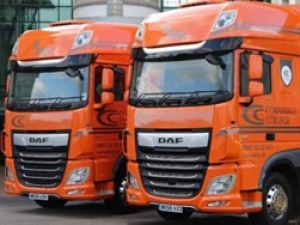
Cornwall College Camborne has welcomed two new lorries as part of a major investment to enhance training opportunities for students in the heavy goods vehicle (HGV) industry. The college says this "significant investment" will benefit both full-time students and apprentices, helping them develop the necessary skills to succeed in the growing HGV sector.
Funded by the Department for Education, the new vehicles will provide hands-on experience with state-of-the-art technology, giving students access to the latest tools and techniques used in the industry. Neil Atkinson, curriculum area manager for engineering and motor vehicles, called the purchase a "fantastic addition" that will allow for more comprehensive and up-to-date training.
Luke Bazeley, head of campus, said the HGVs are a "game changer" for aspiring engineers and mechanics. He emphasised that these vehicles would enable students to learn locally, giving them vital skills for a sector with increasing demand for trained professionals.
This investment marks a key step in expanding the college's ability to prepare students for successful careers in the HGV industry, offering them real-world experience with modern equipment.
Starting a Career in Driving

The logistics sector in the UK is rapidly growing, with a rising demand for drivers, especially for vans and Large Goods Vehicles (LGVs) or Heavy Goods Vehicles (HGVs). Despite an increase in van numbers, there’s a shortage of HGV drivers, making it a great time to consider a career in the industry.
What Does a Commercial Driver Do
HGV drivers play a critical role in the movement of goods, ensuring deliveries reach their destinations. Responsibilities include vehicle checks, securing loads, planning routes, and keeping accurate records of driving hours with digital tachographs. Drivers also need to comply with working time regulations, which limit driving to 56 hours a week.
Why Become a Truck Driver
With increasing demand and fewer drivers, opportunities are plentiful. It’s a job for responsible, patient individuals with good driving skills and flexibility. Pay is competitive, typically ranging from £23,000 to £45,000, and can go up to £55,000 for specialist drivers.
Career Potential
HGV drivers can pursue various roles such as Tanker Driving, Transport Manager, or Health and Safety Officer. You can obtain additional qualifications like Class 1 (C+E) or Class 2 (Cat C) licences, opening doors to even more opportunities.
How to Get Your HGV Licence
You can train through an apprenticeship or self-fund HGV training to gain a relevant licence. You’ll need to pass the LGV theory test, hold a full car licence, be over 18, and meet medical requirements.
Gaining Experience
After obtaining your HGV licence, gain experience through logistics agencies that offer temporary contracts, giving you the chance to work with different companies and potentially secure permanent positions.
Driver CPC
To drive large goods vehicles commercially, you need a Driver Qualification Card (DQC) and must complete periodic Driver CPC training. This involves 35 hours of training every five years, covering essential topics like health and safety and fuel efficiency.
Driver Jargon and Terminology
If you're new to logistics, you might hear terms like "sleeper cab," "tramper," or "ADR" (for hazardous goods drivers). Understanding these terms will help you navigate the world of commercial driving.
Licence Categories
- Van Driver (Cat B): Vehicles up to 3,500kg.
- 7.5 Tonne Driver (Cat C1): Vehicles between 3,500kg and 7,500kg.
- Class 2 Driver (Cat C): Vehicles over 7,500kg with a trailer up to 750kg.
- Class 1 Driver (Cat C+E): Category C vehicles with trailers over 750kg.
Other Opportunities in Logistics
Beyond driving, the logistics industry offers roles like Transport Planner, Forklift Operator, and Warehouse Supervisor. There are many paths within this vital sector.
For more information, explore Quicktemps latest roles here!
Disclaimer
This information has been gathered from sources including GOV.UK and RoSPA. Although every effort has been made to ensure accuracy, Quicktemp and its affiliates accept no liability for any errors or omissions.
Mental Health
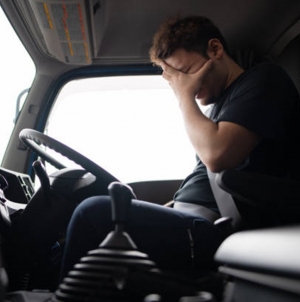
Did you know that 1 in 4 people in the UK experience a mental health issue each year? Professional drivers are considered a high-risk group for mental health concerns, and cases are rising. While progress has been made, many still find it difficult to talk about mental health. Opening up the conversation is key.
We regularly discuss physical health, so why not mental health? The information here is a starting point for that conversation.
Mental Health in the Workplace – Key Facts
- 15 million working days were lost to stress, anxiety, and depression in 2017 (ONS)
- Addressing mental health in the workplace can boost productivity and reduce absences
- Stressful environments, such as those faced by drivers, can exacerbate mental health problems
- 95% of people calling in sick due to stress often provide a different reason
Why Are Drivers a High-Risk Group
- Unpredictable working conditions like traffic and tight deadlines
- Sedentary lifestyle, poor diet, and lack of sleep contribute to physical and mental fatigue
- Loneliness is a significant issue, as drivers often spend long periods alone
- Most drivers are male, a group less likely to seek help for mental health concerns
Simple Steps for Wellbeing
- Connect: Build and maintain social relationships – talk and listen
- Be Active: Regular exercise boosts both physical and mental health
- Take Notice: Appreciate the changing views around you while driving
- Keep Learning: Stimulate your mind – read or learn something new during breaks
- Give: Acts of kindness benefit your mental wellbeing
Tips for Employers
- Prioritise mental health by encouraging open conversations and promoting resources
- Ensure your team takes regular, quality breaks beyond legal requirements
- Routinely monitor staff wellbeing, asking open questions like "How are you feeling?"
- Offer a confidential support channel for staff members to seek help
Seeking Help
If you or someone you know needs support, consider these resources
- Mental Health UK: www.mentalhealth-uk.org
- Mind: www.mind.org.uk
- NHS Choices: www.nhs.uk
- Samaritans: www.samaritans.org or call 116 123 (free)
Disclaimer
This guide is intended for information only and is not an authoritative document. Quicktemp and its affiliates accept no liability for any errors or omissions. For any mental health concerns, please seek professional medical advice.
Winter Driving
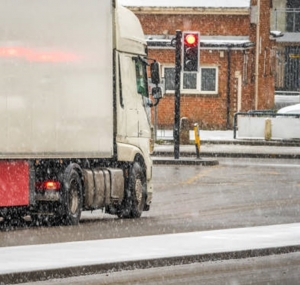
Winter driving can be challenging, even for experienced drivers. The unpredictability of UK weather brings hazards like snow, ice, rain, fog, and strong winds, along with dark mornings and evenings. It’s no surprise that accidents rise during the winter months.
To stay safe, it’s important to be prepared. Common sense and extra caution can help reduce the risk of injury to yourself and other road users.
Be Prepared
Winter conditions take a toll on vehicles, so in addition to your normal pre-journey checks, look out for wear on tyres, corrosion around battery terminals, and ice buildup on tail lifts. Ensure everything is working, secure, and undamaged. Pack an emergency kit with essentials like warm clothes, a blanket, food, a flask, a torch, and a shovel.
Watch the Weather
Check local and national weather forecasts regularly. If severe conditions are expected, assess whether the journey is necessary. While driving, look for signs with weather warnings and reduced speed limits.
- Fog: Use dipped headlights. If visibility is less than 100 metres, use fog lights
- Rain: If aquaplaning, ease off the accelerator and slow down gradually
- Snow/Ice: Listen for tyre noise—silent tyres may mean ice. Avoid braking on ice to prevent skidding
- Gale-force winds: High-sided vehicles are vulnerable, but also watch out for cyclists and motorcyclists
Disclaimer
This information has been gathered from sources including GOV.UK and RoSPA. Although every effort has been made to ensure accuracy, Quicktemp and its affiliates accept no liability for any errors or omissions.
Vehicle License Categories

Understanding the key terminology and legal requirements for goods vehicles is essential for both drivers and operators in the UK. From vehicle weight limits to licence categories, staying informed ensures compliance with regulations and promotes road safety. This guide outlines the critical aspects of goods vehicle operations, including maximum authorised mass (MAM), licence classifications, and axle weight restrictions, helping you navigate the rules that govern the use of commercial vehicles on UK roads.
Goods Vehicle Terminology
- MAM (Maximum Authorised Mass): Equivalent to Gross Vehicle Weight (GVW)
- GVW (Gross Vehicle Weight): Total vehicle weight including the load
- GTW (Gross Train Weight): Weight of the vehicle, trailer, and load combined
- RFS (Road Friendly Suspension): Air or air-equivalent suspension systems
Goods Vehicle Licence Categories
- B: Vehicles up to 3,500kg MAM with up to eight passenger seats (plus driver). Includes trailers under 750kg or with a combined MAM below 3,500kg
- B+E: Category B vehicles with trailers
- Before 19 January 2013: Any size trailer within towing limits
- After 19 January 2013: Trailers up to 3,500kg MAM within vehicle towing limits
- C1: Vehicles between 3,500kg and 7,500kg MAM, with trailers up to 750kg
- C1+E: C1 vehicles with trailers over 750kg, combined MAM up to 12,000kg
- C: Vehicles over 3,500kg MAM, including trailers up to 750kg
- C+E: Category C vehicles with trailers over 750kg
Maximum Goods Vehicle Weights
Rigid Vehicles
- 2 axles: 18,000kg
- 3 axles: 26,000kg*
- 4 axles: 32,000kg, axle spread of at least 6.4m*
Drawbar Combinations
- 26,000kg: Three axles**
- 36,000kg: Four axles**
- 44,000kg: Six axles with RFS, driving axles not exceeding 8.5 tonnes or with twin tyres
Articulated Combinations
- 26,000kg: 2+1 axles
- 44,000kg: Six-axle combination (on intermodal work)
Maximum Axle Weights
- Single (non-driving): 10,000kg
- Single (driving): 11,500kg
- Tandem (driving): 19,000kg
- Tri-axle bogie: 24,000kg
*Driving axles must have twin tyres and RFS or not exceed 9.5 tonnes
Disclaimer
This information has been gathered from sources including GOV.UK and RoSPA. Although every effort has been made to ensure accuracy, Quicktemp and its affiliates accept no liability for any errors or omissions.
Tachographs
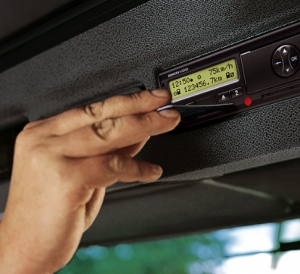
Tachographs track driving time, speed, and distance. There are two types—analogue and digital—with digital tachographs mandatory for all commercial vehicles registered after 1 May 2006 (unless exempt). These devices ensure drivers and employers comply with regulations on driving hours.
Digital tachographs store data securely in the vehicle unit (VU) and the driver’s smart card, with advanced security features to prevent tampering.
Exemptions
Certain vehicles are exempt, including:
- Vehicles limited to speeds under 40 km/h
- Emergency and breakdown services within 100 km of base
- Non-commercial vehicles under 7.5 tonnes
For more details, visit the gov.uk website.
Digital Tachographs
The VU has a display, printer, controls, and two card slots. It stores data for around 365 days, displaying information in real-time. Since April 2015, the legal limit for downloading vehicle data has increased to 90 days. The system warns drivers when 4¼ hours of driving without a break has occurred and again at 4½ hours.
Driver Responsibilities
Drivers must use the tachograph every day to record driving time, work periods, availability, and breaks. Records for the current day and the last 28 days must be carried and presented to enforcement officers if requested. Tachograph records should be submitted to your Quicktemp office or client within 30 days.
Using Digital Tachographs
- Ensure the tachograph is calibrated
- Carry enough print rolls and check the mode switch is correctly set
- Report faults to the operator and make manual entries if the card is lost, damaged, or malfunctioning
- Keep printouts of driving activities and hand them to the operator
Driver Cards
Drivers need a valid driver card, issued by the DVLA, to operate digital tachographs. Cards are valid for five years and store up to 28 days of data, including vehicle usage, duty periods, and roadside checks.
Lost, Damaged, or Stolen Cards
If a card is lost, stolen, or malfunctioning, notify the DVLA immediately and apply for a replacement within seven days. You can continue driving for up to 15 days using manual entries, but must submit printouts at the start and end of each journey. The printouts must include the driver’s name and driving licence number.
Log On/Off Procedures
Log On
- Insert the driver card with the chip facing up.
- Follow on-screen instructions for manual entries if required.
- Select your country, and the card pictogram will confirm the logon.
Log Off
- Press the eject button and select your country.
- The system will ask if you need a printout.
- The driver card is then released.
Analogue Tachographs
For analogue tachographs, drivers must ensure the clock is set to the correct UK local time before driving. Fill out the chart completely with start/finish locations, dates, and odometer readings. Carry charts for the current day and the previous 28 days.
What Drivers Must Carry
Drivers must always carry
- Tachograph Driver Card
- Driver Qualification Card (CPC)
- 28 days of work and rest history
- Driving Licence
- Sufficient print rolls for the tachograph
- Defect reports for the vehicle
If the tachograph is faulty or records are inaccurate, drivers must make handwritten entries on the printout.
Disclaimer
This information has been compiled using resources from GOV.UK and RoSPA. While every effort has been made to ensure its accuracy, Quicktemp and its associated entities accept no responsibility for any errors or omissions.
Speed Limits
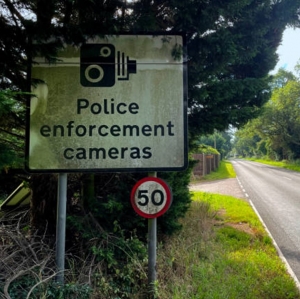
In today’s fast-paced world, we’re often impatient for things to happen quickly. However, when driving, it’s crucial to manage your speed and stay in control. Road safety charity Brake estimates that reducing average speeds by just 1 mph can lower crash rates by 5%. For professional drivers, who spend the majority of their workday on the road, the risks are even higher.
In 2016, over 1,700 people were killed on UK roads, an average of nearly five fatalities per day. It's important to remember that speed plays a huge role in these accidents, and responsible driving can help reduce these numbers.
Key Stats and Tips
- A pedestrian hit at 40 mph is 90% likely to be killed, but at 20 mph they have a 90% chance of survival
- In 2015, 222 deaths involved crashes where speed limits were exceeded
- Speed limits are not targets; adjust your speed based on road conditions. In 2015, 167 people died from driving too fast for the conditions
- On 30 mph roads, 45% of drivers exceed the limit, while 46% of drivers exceed the 70 mph limit on motorways
- Braking distances vary with speed and load, so adjust your driving accordingly
- Smoother, slower driving saves fuel and can prevent accidents
Know Your Limits
While no speed is completely safe, driving slower and observing speed limits can reduce road casualties. Vans over 2 tonnes must adhere to lower speed limits on single and dual carriageways, and those over 7.5 tonnes face restrictions on motorways.
Speed Limiters
Speed limiters restrict a vehicle's maximum speed by controlling fuel supply. They are required for vehicles with more than eight passenger seats or goods vehicles over 3.5 tonnes. Many limiters are set at 56 mph to improve fuel efficiency.
Disclaimer
This information has been compiled using resources from GOV.UK and RoSPA. While every effort has been made to ensure its accuracy, Quicktemp and its associated entities accept no responsibility for any errors or omissions.